





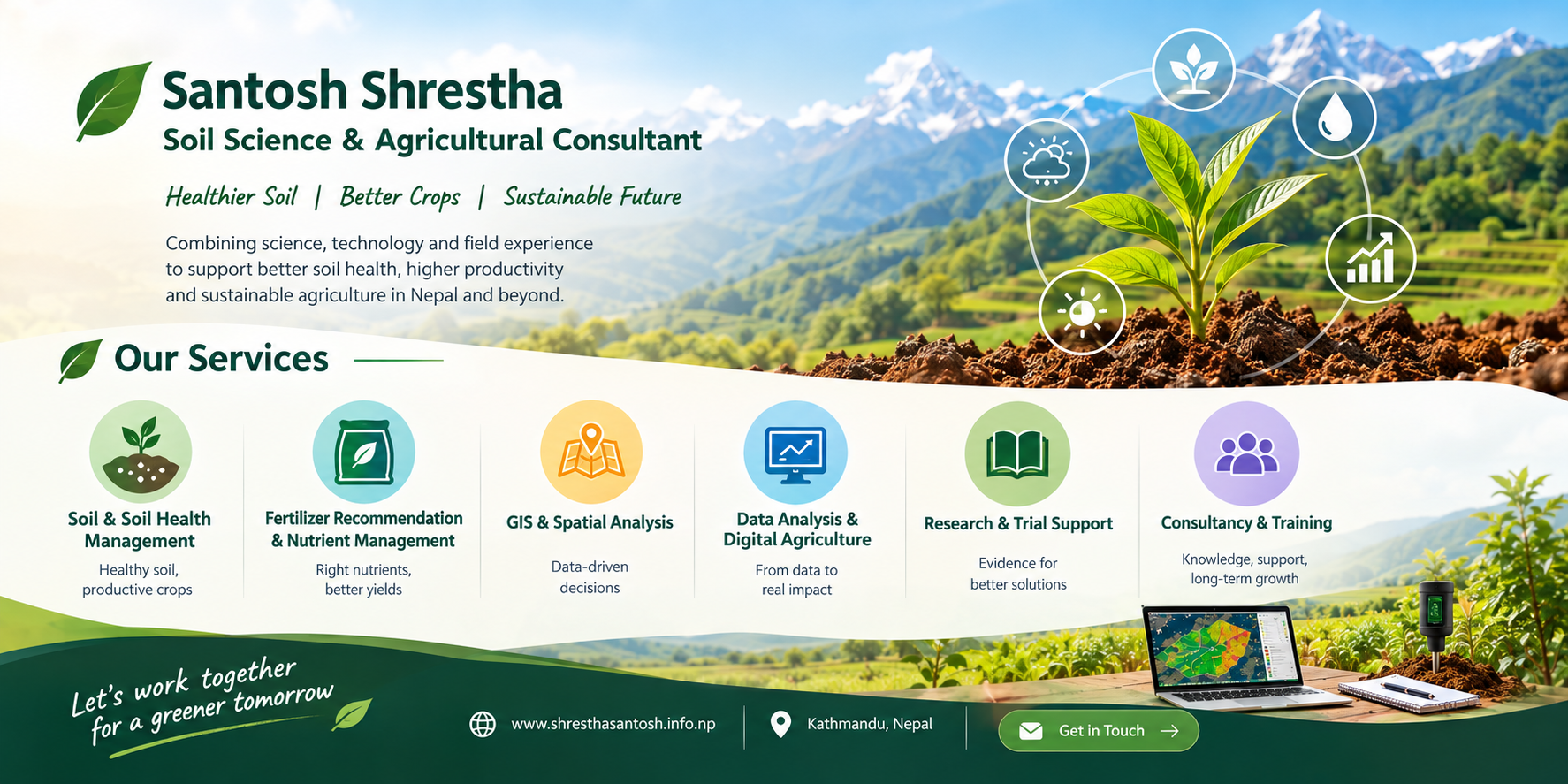
Soil and Agriculture Specialist
Sustainable Soil Management & Agricultural Research
Santosh Shrestha
Transforming Data into Sustainable Agricultural Solutions

Soil Health Expert, Kalpa Agro Pvt. Ltd. and Kalpa Trading Pvt. Ltd.
Agri Systems & Digital Agriculture Specialist, Egrow Tech Pvt. Ltd.
Mr. Santosh Shrestha is a Soil Expert and Soil Health Specialist with expertise spanning sustainable soil management, laboratory quality systems, and applied agricultural research. He holds a Master’s degree in Soil Science from Tribhuvan University and a Bachelor’s degree in Agriculture (Soil Science), along with advanced training in Sustainable Soil Management from Wageningen University & Research.
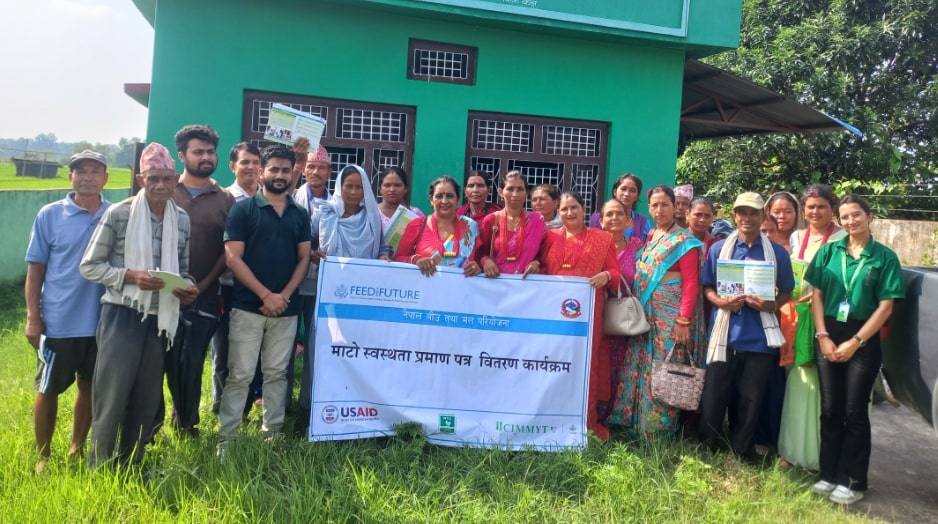
He has extensive experience in soil, plant, compost, and fertilizer analysis, soil sampling, GIS mapping, and data-driven soil fertility assessment. Professionally, he has worked across vaious researches, laboratory management, consultancy, and private-sector agribusiness, including leadership roles in ISO/IEC 17025:2017 laboratory quality management, fertilizer formulation, and soil health improvement programs. He has contributed to national and international development projects, including USAID and CIMMYT supported initiatives, focusing on rural soil testing facilities, laboratory capacity enhancement, and sustainable soil management planning.
He is also an active researcher, with multiple peer-reviewed publications in international journals, and has received several national and international professional trainings, including specialized soil and fertilizer testing training from CFQC&TI, Government of India. His work bridges science, policy, and practice to promote resilient, productive, and sustainable agricultural systems.
M.Sc. in Soil Science
Tribhuvan University
Soilx: Sustainable Soil Management: Soil for Life
Wageningen University & Research
My Expertise
Skills & Competencies
Combining scientific knowledge with technical proficiency to deliver comprehensive agricultural solutions.
Laboratory System Management
GIS Mapping & Spatial Analysis
Data Analysis and Reporting
Microsoft Office Packages
Legal Compliances
Project Management
What I Offer
Professional Services
Comprehensive soil management and agricultural consulting services tailored to your needs.
Soil Analysis and Management
Guidance for comprehensive soil sampling, laboratory analysis, and interpretation for optimal nutrient management and crop production.
Land Suitability Assessment
Evaluate land potential for various agricultural uses, including crop selection and suitability classification.
GIS Mapping & Cartography
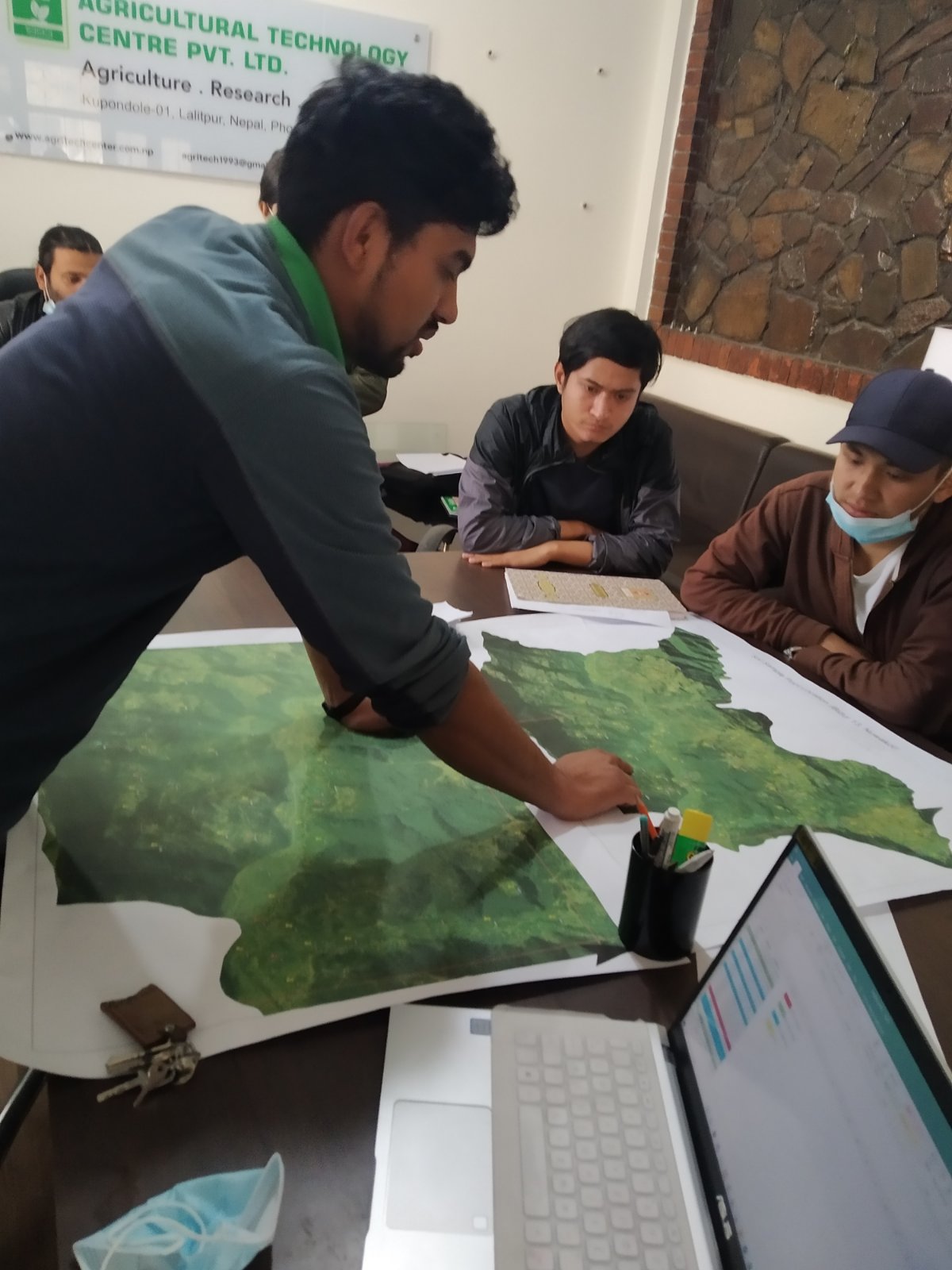
Create detailed soil maps, land use maps, and spatial analyses using advanced GIS technologies.
Agricultural Data Analysis
Statistical analysis and visualization of agricultural data to support evidence-based decision making.
Fertilizer Manufacturing
Develop and produce scientifically balanced fertilizers for optimized nutrient efficiency and higher agricultural yields.
Legal Consultation
Provide legal consultation for fertilizer/pesticide/soil ammendments import, registration, and regulatory compliance documentation.
Agricultural Consultation
Any agricultural consultation such as technical sessions on soil management, GIS mapping, soil test method, business planning, technical report writing, etc. and many more.
Insurance Loss Assessment
Registered agricultural loss assessor for evaluating crop losses due to natural calamities and preparing detailed loss assessment reports.
My Work
Featured Projects
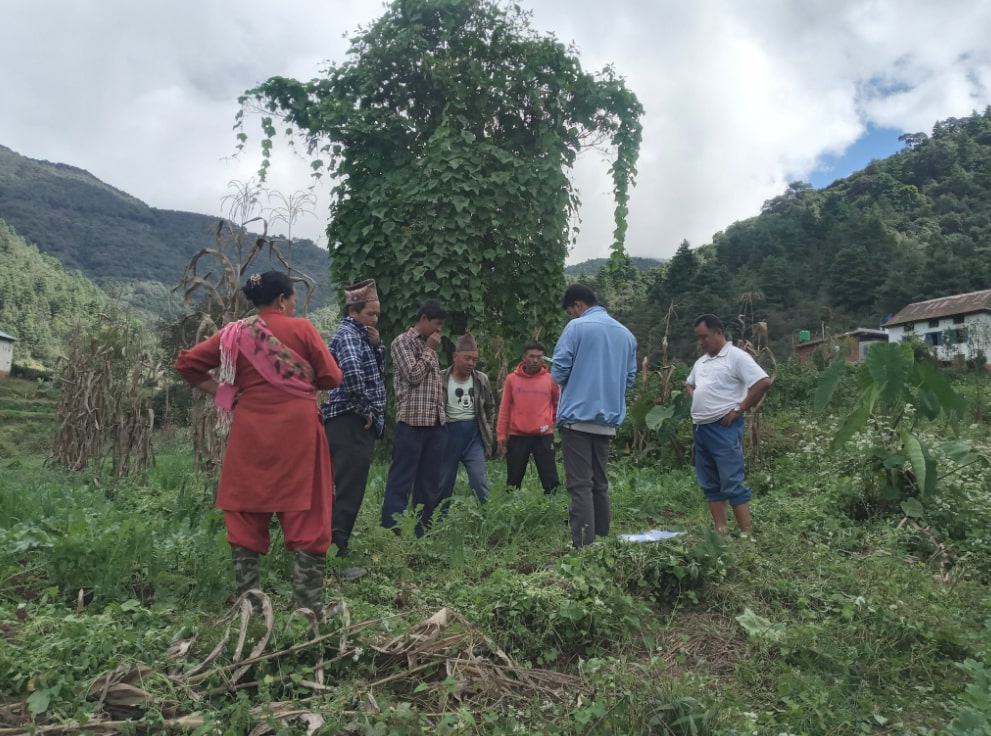
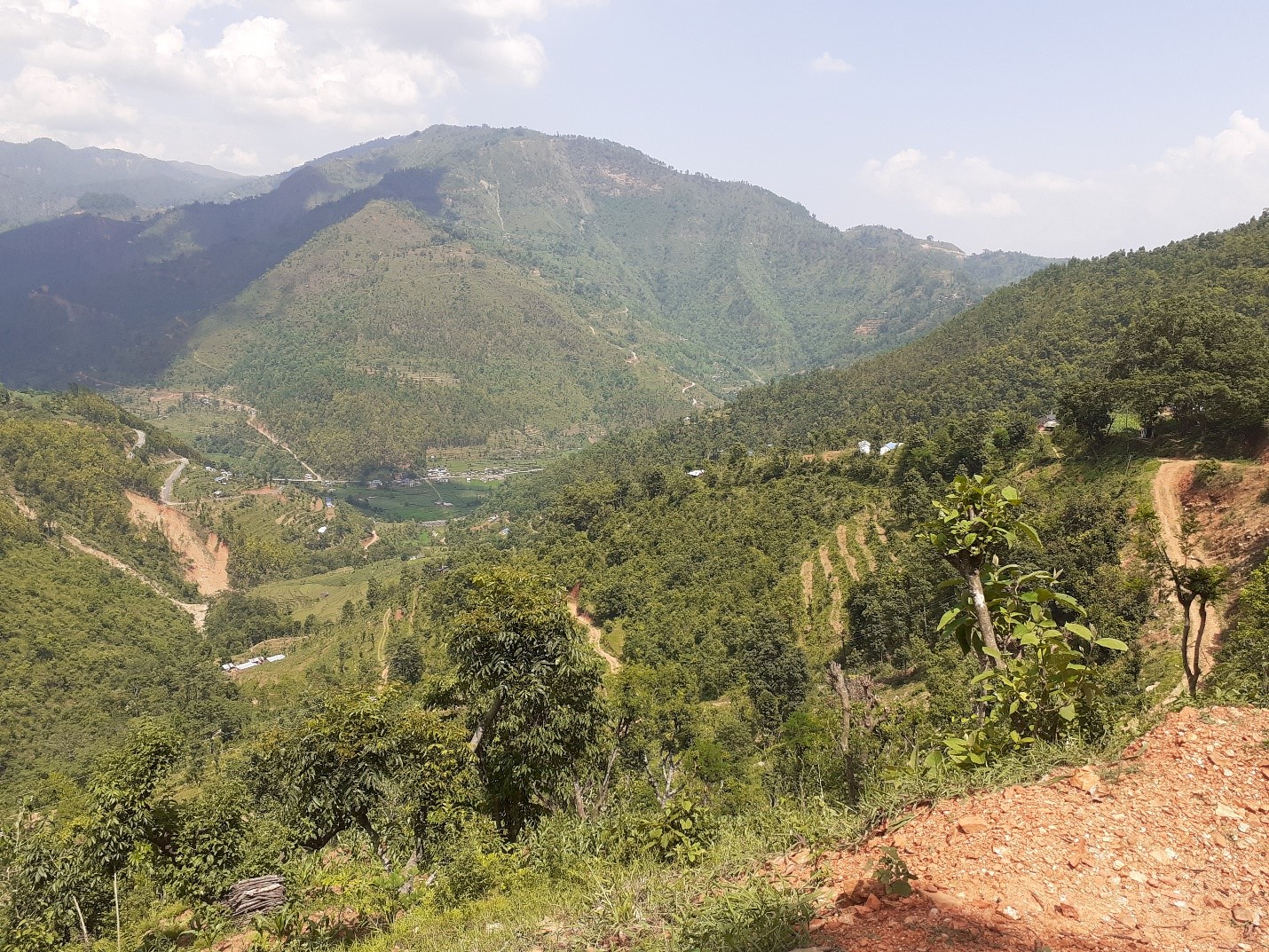
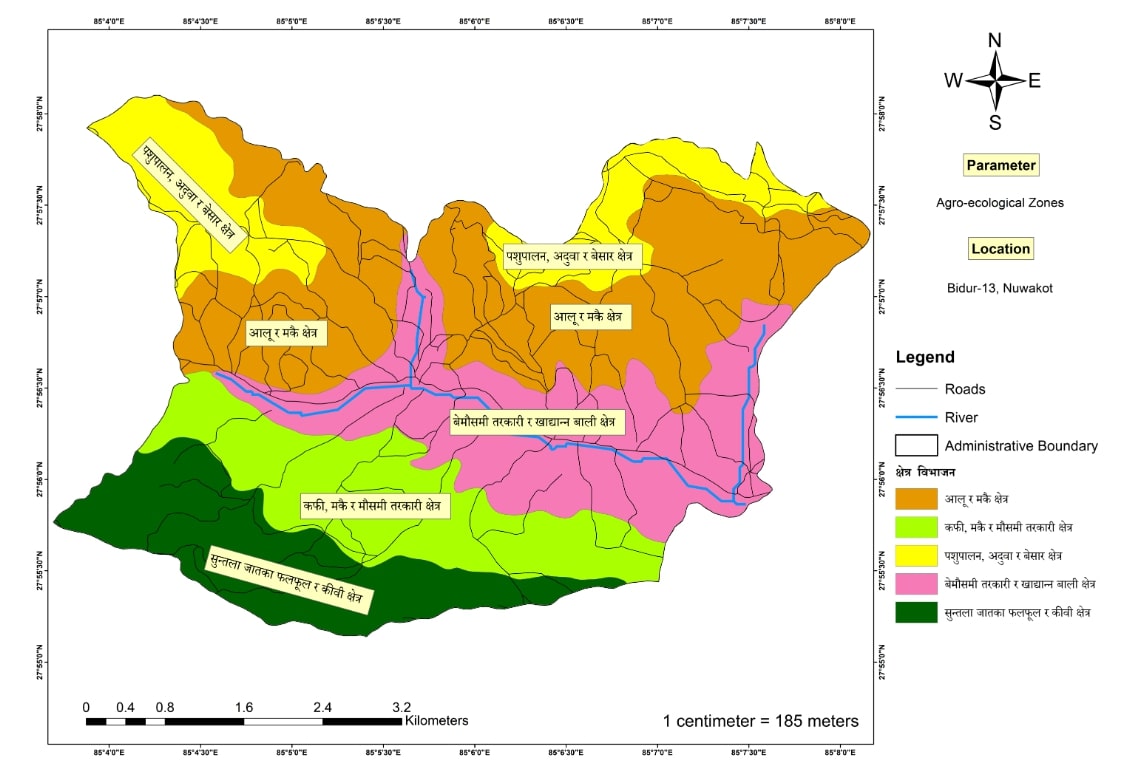
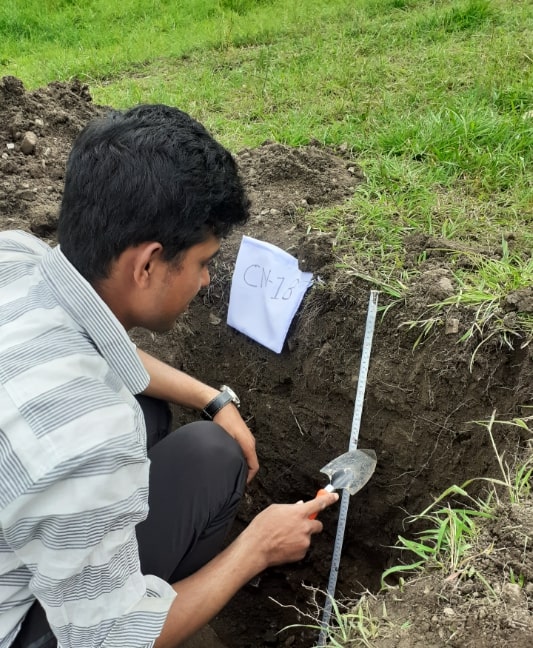
A selection of projects showcasing my expertise in soil science, GIS mapping, and agricultural analysis.
Research & Writing
Publications & Papers
Adoption of Livestock Insurance among Dairy Farmers at Chitwan, Nepal
Natural calamities, disease and pest, and unpredictable weather possess a high risk in livestock farming and cost a heavy loss to the farmers. Livestock insurance is one of the important strategies to reduce the risks related to livestock production. To assess the adoption process and impact of livestock insurance on dairy farmers, a study was conducted at Chitwan district among the 98 farmers (insured and non insured) sampled using stratified random sampling. Descriptive statistics were used to analyze the socio-economic and demographic variables of insurer and non-insured farmers. Pro bit model regression was used to analyze the impact of different variables on adoption of livestock insurance. In addition, t-test was also done to compare the numeric mean value of the variables of two categories of respondent, insured and non-insured. The Pro bit model results revealed that the age, gender, income from livestock, awareness about insurance and awareness of subsidy on insurance have a significant (p<0.05) effect on the adoption of livestock insurance. The result of Chi-square test suggests that members of a farmers group/cooperatives, subsidy, loan and members of community agents have a significant (p<0.05) effect on the adoption of the livestock insurance. The study underscores the need for a strategic policy to promote livestock insurance in Chitwan district. Both the government and non-life insurance companies must prioritize enhancing farmer awareness and understanding through targeted advertising and training to establish credibility and reliability. These findings will be helpful for the improvement of different livestock insurance policy and programs implemented by different government bodies and insurance companies.
Soil Fertility Status of Nepal: Analysis from 2011-2025
Soil fertility governs agricultural productivity by regulating nutrient availability for crop growth. This study reviews soil fertility trends in Nepal from 2011/12 to 2024/2025, analyzing total nitrogen (N), available phosphorus (P), available potassium (K), soil organic matter (OM), and pH as information provided from governmental laboratories and digital soil map of Nepal. Time-series regression analyses reveal marginal increases in nutrient indices (N: +0.02, r² = 0.11; P: +0.07, r² = 0.28; K: +0.08, r² = 0.23), with a shift from low to medium and high nutrient status. Conversely, the pH index declined slightly (-0.006, r² = 0.04), indicating increasing soil acidity. Declines in organic amendments, imbalanced fertilizer application, and inadequate soil management practices drive these trends, threatening longterm soil health and food security. These findings underscore the need for evidence-based interventions to optimize nutrient management and mitigate acidification, ensuring sustainable agricultural systems in Nepal.
Lime Requirement Comparison Between National Tabular Matrix and Standard Buffer pH Method
The Shoemaker, Mclean, and Pratt (SMP) buffer pH method is a widely adopted standard approach to quantify the lime requirement (LR) of soil worldwide. In the context of Nepal, a national tabular matrix (NTM) method, a blanket approach, is adopted to calculate LR to lessen the effect of soil acidity. This study aims to identify disparities in LR for acidic soil between the standard SMP method and NTM method. To achieve this, a greenhouse experiment was conducted with 50 pretested acidic soil samples having sandy loam (n = 20), loam (n = 20), and clay loam (n = 10) textural classes. The samples were treated with lime rates obtained from both the NTM and SMP methods and were incubated for 8 months, with periodic soil pH measurements taken every month. The results showed a significant difference in neutralizing acidic soil between the two methods. NTM lime recommendation rate was found lower than SMP lime rate in sandy loam (3.2 times lower) and loam (1.8 times lower) soil but a higher rate (1.2 times higher) in clay loam soil. Due to this disparity in lime recommendation, the final soil pH was below the target pH of 6.4 in the NTM method for both sandy loam and loam soils but was found similar to clay loam soil. The final pH gained was significantly higher in SMP than the target pH in each texture, while NTM had a similar pH for sandy loam textured soil only. This study suggests that the NTM lime rates need revision, approximately with an increment of 3.2 times in sandy loam and 1.8 times in loam soil, while decreasing by 1.2 times in clay loam soil. A regression equation LR = 18.855 − 2.722∗IpH + 1.146∗OM − 0.068∗CC is proposed to determine LR based on initial soil pH (IpH), organic matter (OM), and clay content (CC), which closely resembles the SMP buffer pH recommendation rate (RMSE = 2.79) for neutralizing the acidic soil.
Soil fertility mapping of a cultivated area in Resunga Municipality, Gulmi, Nepal
Soil fertility maps are crucial for sustainable soil and land use management system for predicting soil health status. However, many regions of Nepal lack updated or reliable soil fertility maps. This study aimed to develop the soil fertility map of agricultural areas in Resunga Municipality, Gulmi district of Nepal using the geographical information system (GIS) technique. A total of 57 composite geo-referenced soil samples from the depth (0–20 cm) were taken from the agricultural land of an area of 52 km2. Soil samples were analyzed for their texture, pH, organic matter, total nitrogen, available phosphorous, available potassium, available boron, and available zinc. These parameters were modelled to develop a soil quality index (SQI). Using the kriging tool, obtained parameters were interpolated and digital maps were produced along with soil quality and nutrient indices. The result showed that the study area lies within the fair (0.4 to 0.6) and good (0.6 to 0.8) range of SQI representing 96% and 3% respectively. Soil organic matter and nitrogen showed moderate variability exhibiting a low status in 95% and 86% of the total study area. Phosphorous and potassium showed medium status in 88% and 75% of the study area, respectively. Zinc was low and boron status was medium in most of the area. To maintain soil fertility is by improving the rate of exogenous application of fertilizers and manures. The application of micronutrients like boron and zinc is highly recommended in the study area along with organic manures. The soil fertility map can be used as a baseline for soil and land use management in Resunga Municipality. We recommend further studies to validate the map and assess the factors affecting soil fertility in this region. Soil fertility maps provide researchers, farmers, students, and land use planners with easier decision-making tools for sustainable crop production systems and land use management systems.
Effect of organic manures on degrading soil due to brick manufacture industry at Changunarayan municipality of Bhaktapur district, Nepal
A lab experiment was conducted to analyze the degraded land reclamation potential by the use of organic manure (OM) in the soil collected from Changunarayan municipality of Bhaktapur District, Nepal. Benchmark nutrient test was performed to the different soil sample collected from three land types i.e., brick kiln premises, excavated land and arable land. Further lab test was carried out by adding 2% and 4% OM by weight on 100g of each soil samples, replicating each for three. The samples were incubated at 32oC for 45 days and the soil chemical properties; N, P2O5, K2O, pH and soil organic matter were analyzed. It was revealed that with the application of 4% OM by weight in all soil samples collected, there was increased in chemical parameters analyzed, followed by 2% OM by weight. The total soil nitrogen content and soil organic matter content was found significant (P<0.05) with different treatment of OM. Significant change was seen in the phosphorus content in the soil from brick kiln premises with the application of 4% OM. Slight increase was seen in the potassium content with the application of different treatments in the soils. With the application of 2% and 4% OM, pH was found to be increased significantly in the soil from brick kiln premises. Thus, from this study, it is revealed that the use of 4% OM by weight might be optimal to improve the land degraded by the brick kilns and excavation to some extent but at 4-10 times higher economic cost than usual farming management practices of organic manure.
Effect Of Mid-Term Cropping System Adoption on Soil Chemical Properties at Changunarayan Municipality, Bhaktapur, Nepal
Soil chemical properties plays a crucial role in crop yield. In this study, we evaluated the chemical properties of soils under three different cropping systems practiced for more than five years in Changunarayan municipality of Bhaktapur district of Nepal. The cropping systems includes- (i) cultivation inside polyhouse (Treatment A: polyhouse), (ii) paddy-wheat rotation (Treatment B: P-W), and (iii) paddy-wheat-vegetable rotation (Treatment C: P-W-V). Thirty-nine composite samples (13 replicates from each site) were taken from the area based on variation in landforms. Soil pH, organic matter (%), total nitrogen (%), available phosphorus (mgkg-1), and available potassium (mgkg-1) were evaluated for each sample. The study revealed that the soil pH was acidic and ranges between 4.71 and 5.39, organic matter (1.6-2.39%), total nitrogen (0.091-0.13%), phosphorus (4.48-29.24mg kg-1) and potassium (88.04-109.52 mg kg-1). A significant lower mean pH (4.71), and higher mean organic matter (2.39%), total nitrogen (0.13%) and available phosphorus (29.24 mgkg-1) were observed in cultivation under polyhouse. Incorporation of vegetable in paddy-wheat system gave significant (p<0.05) higher accumulation of soil phosphorus and consistently raised other nutrient status. Moreover, cultivation under polyhouse raised C:N ratio (10.55) significantly than other system. This finding can be relevant to wide range of readers that focus on soil chemical properties and can be used in developing future research strategy and sustainable soil management system in the area.
Cole Crops Disease Management Approaches Practiced by Farmers and its Impact on their Health A Case Study of Nala Kavre District of Nepal
A case study was conducted at Nala, Kavre district to assess the present cultivation and disease management status in cole crops in the year 2019 with use of semi-structured questionnaire among the local farmers. It was found that majority of respondent cultivated cole crops seasonally and faced five major disease problem in it namely: stalk root (Sclerotina sclerotiorum), Alternaria leaf spot (Alternaria brassicae and A. brassicicola), damping off (Pythium sp.), root rot (Rhizoctonia solani) and club root (Plasmodiophora brassicae). For management of those diseases, 83% respondent used conventional method of disease management i.e. chemical fungicides and insecticides. But the methods of management of disease was found significant with IPM training and awareness on biological approaches they have heard or related program attained. Almost 40% respondent had practices IPM packages of pest control based on training they have received and 33% has practiced based on the awareness program they have received. Also female guided farming has more probability to adapt IPM tools to minimize effect of pesticides and cooperatives had also played major role in mass communicating benefits of IPM. With 83% conventional management practicing farmers, they reported to face piles of immediate and chronic health issues due to continuous pesticidal use. Eye irritation (16.9%), skin problems (21.4%), headache (10.7%), respiratory problems (7.1%), and vomiting (5.3%), and chronically cancer (27.7%) was reported in the area due to prolonged and hazardous use of pesticides in conventional practices as per the respondents.
Factors affecting anemia among women of reproductive age in Nepal: a multilevel and spatial analysis
The main objective of this study was to explore the factors affecting anaemia among women of reproductive age (WRA) in Nepal using spatial and multilevel epidemiological analysis. This cross-sectional study analysed data from the 2016 Nepal Demographic and Health Survey. Spatial analysis was performed using ArcGIS software V.10.8 to identify the hot and cold spots of anaemia among WRA (15–49 years). Data were analysed using multilevel mixed-effect logistic regression analysis. A total of 6414 WRA were included in the analysis. Anaemia defined by WHO as haemoglobin level less than 120 g/L in non-pregnant women and less than 110 g/L in pregnant women. The spatial analysis showed that statistically significant hotspots of anaemia were in the southern Terai region (four districts in province 1, eight districts in province 2, one district in Bagmati province, two districts in province 5 and one district in Sudurpaschim province) of Nepal. At the individual level, women who underwent female sterilisation (adjusted OR, aOR: 3.61, 95% CI 1.10 to 11.84), with no education (aOR: 1.99, 95% CI: 1.17 to 3.39), and from middle socioeconomic class families (aOR: 1.65, 95% CI: 1.02 to 2.68) were more likely to be anaemic, whereas, older women (>35 years) (aOR: 0.51, 95% CI: 0.26 to 0.97) and those women who were using hormonal contraceptives (aOR: 0.63, 95% CI: 0.43 to 0.90) were less likely to be anaemic. At the community level, women from province 2 (aOR=2.97, 95% CI: 1.52 to 5.82) had higher odds of being anaemic.WRA had higher odds of developing anaemia, and it varied by the geographical regions. Nutrition-specific and nutrition-sensitive interventions can be tailored based on the factors identified in this study to curb the high burden of anaemia.
Testimonials
What People Say

"Mr. Santosh Shrestha served as Team Leader for the Waste Sample Survey for Solid Waste Management and Laboratory Testing Works with a high level of professionalism and technical competence. He effectively led field coordination, trained site supervisors, and ensured accurate solid waste characterization, data monitoring, and analysis. His contribution to report preparation and presentation significantly supported the successful completion of the project"
Mr. Binod Maharjan
Project Coordinator, CEMAT Consultant Pvt. Ltd

"Mr. Santosh Shrestha served as Technical Lead in the partnership NSAF project with ATC , where he played a key role in soil sampling, soil testing, and the development of soil health cards for farmers. He provided effective technical guidance and conducted capacity-building trainings for farmers and technicians, significantly enhancing understanding and adoption of soil health–based management practices. His technical expertise and dedication contributed meaningfully to improved soil health assessment and sustainable agricultural decision-making."
Mr. Naba Raj Pandit, PhD.
Senior Research Associate, CIMMYT

“Mr. Santosh Shrestha served as Technical Expert for the Survey of Soil Quality and Soil Management, demonstrating strong expertise in soil sampling design and field implementation across Chitlang (Makwanpur). He conducted comprehensive assessments of soil quality, health, and existing soil management practices, and successfully prepared a sustainable soil management plan tailored to local conditions. His technical leadership and analytical approach contributed significantly to evidence-based soil management recommendations.”
Mr. Bhushan Shrestha, PhD.
Associate Professor, MBUST

“I had the opportunity to work with Mr. Santosh Shrestha on several soil health and agricultural productivity projects. His contributions to field data supervision, soil testing, DPR preparation, thematic mapping, and peer-reviewed research demonstrate strong technical expertise and professionalism. His commitment to evidence-based and sustainable soil management is highly commendable.”
Mr. Saroj Koirala
Doctoral Researcher at University of Jyväskylä
Get In Touch
Let's Work Together
Contact Information
Ready to start your next project? Get in touch and let's discuss how I can help you achieve your agricultural goals.